Table of Contents
- Why Facebook Landing Page Conversions Are Critical
- Essential Prerequisites for Effective Optimization
- Step 1: Align Your Ad Copy with Landing Page Message
- Step 2: Optimize Above-Fold Elements for First Impressions
- Step 3: Simplify User Journeys and Reduce Friction
- Step 4: Accelerate Mobile Page Load Speed
Why Facebook Landing Page Conversions Are Critical
Learning how to increase conversion rate on Facebook landing pages starts with focusing every page on a single call-to-action and treating optimization as a continuous habit, not a one-off fix. The median landing page conversion rate across all industries is 6.6%, but pages built around a single CTA average 13.5% conversions, outperforming pages with five or more links that hover around 10.5%. For Facebook advertisers, that performance gap is the difference between a campaign that generates real returns and one that wastes budget on clicks that never convert.
We have found that continual testing of headlines, form length, and images needs to be done regularly because your users' behavior changes over time. There are some things you will want to set up before jumping headfirst into certain tactics.
Key Takeaways
- Here are some tips for how to increase conversion rate on Facebook landing pages: prior to undertaking any optimisation steps, we first have to determine what should be done.
- The message match is all about making sure your ad and its promises align perfectly with what you're serving on that page when a user arrives there.
- When you have the copy written for the ad and the message on your landing pages in alignment, what’s left is the first viewport, also known as the area above the fold.
- It’s true that if you have too much friction on your landing page then you will not see any conversions.
- The mobile landing page speed is often overlooked as a major factor in driving conversions in Facebook advertising efforts.
Essential Prerequisites for Effective Optimization
Here are some tips for how to increase conversion rate on Facebook landing pages: prior to undertaking any optimisation steps, we first have to determine what should be done. Across all sectors the mean landing page conversion rate has been 6.6%. While individual gains won't seem that significant, when we make conversion enhancement our normal practice instead of an infrequent activity, improvements can accumulate. We approach it as a systematic, iterative process in which every test informs the next improvement.
Pages with a single call-to-action have an average conversion rate of 13.5%, while those with five or more links only get 10.5%. Placing the main offer above the fold, where 57% of viewing time is concentrated, puts the value proposition in front of visitors immediately. Tailoring content to the traffic source—whether it’s paid social, email, or organic—keeps expectations aligned. These principles are essential for anyone learning how to increase conversion rate in digital marketing, because structural clarity applies across channels.
Having established all these things, our next step must be getting your ad and page content to speak in concert. Then we'll move onto alignment and fill in any gaps left when you promised something on the ad that wasn't present on the landing page. Each visitor should come away from their journey with all expectations met.
Step 1: Align Your Ad Copy with Landing Page Message
The message match is all about making sure your ad and its promises align perfectly with what you're serving on that page when a user arrives there. Per Quanta Intelligence, successful audits include checks for these specific elements: who the product serves, what its main problem or goal is, the actual promise made in the ad's headline, its offers, the actions requested from users, and the general voice and tone used across ads and marketing copy.
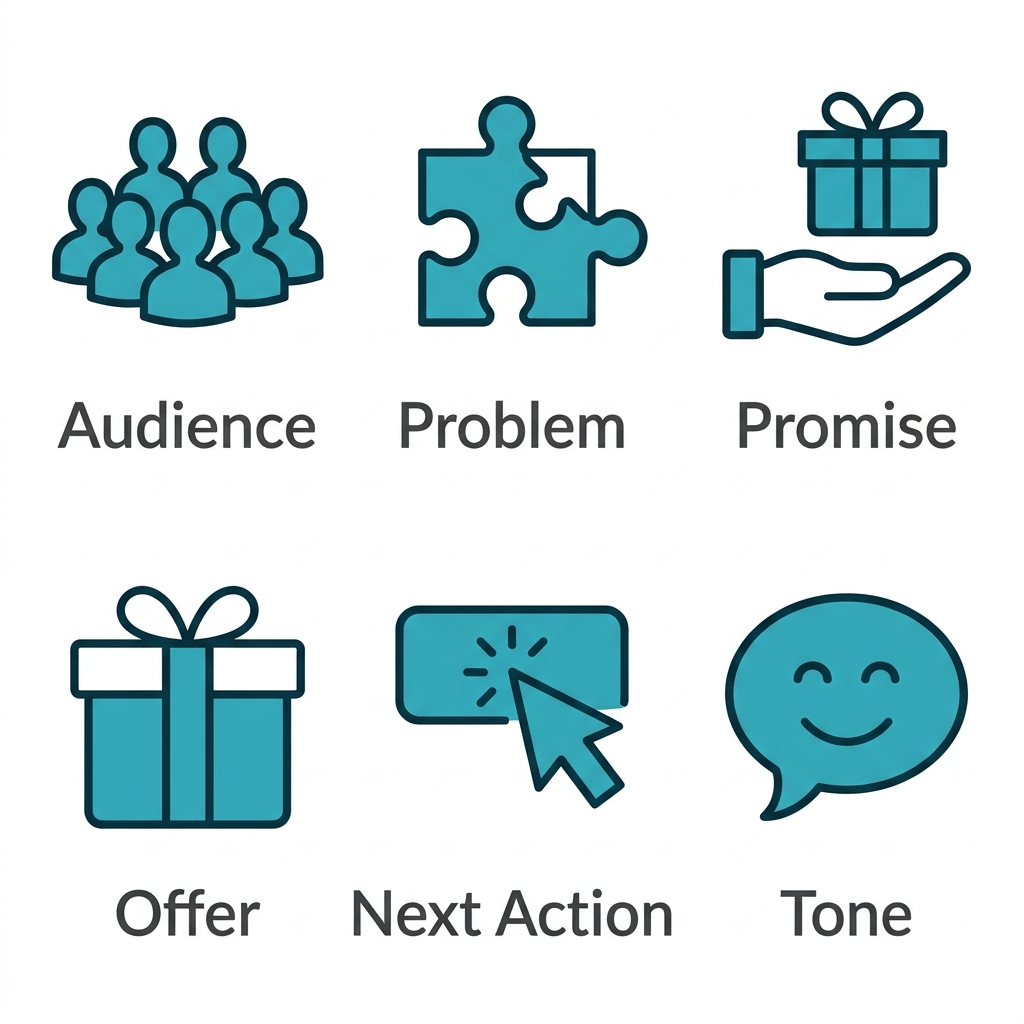
Segment the performance data for campaigns, ad groups, and devices to catch any signs of message drift. With your ad copy and landing pages all lined up, look at the fold-up portion of your landing pages and make sure to drive home that same message consistently.
Step 2: Optimize Above-Fold Elements for First Impressions
When you have the copy written for the ad and the message on your landing pages in alignment, what’s left is the first viewport, also known as the area above the fold. This section has to entice the user into staying, and we want to make sure our headline, hero image, sub-headline, and call-to-action reinforce the same promise that brought them here, without confusing them.
In the conversion optimization industry, there’s an opinion that there are four dimensions that all match well: verba, visualis, offeris and audience. As soon as this is kept on point in a page, we are quickening the pace at which trust is formed since we satisfy expectations that are set when someone enters that specific page. Data suggests that moving from a standard page to something specifically tailored for the intent of that page can achieve conversion rate improvements of 50% or more.
To up your game when increasing a conversion rate on a page, take care of this little guy called viewport first: that’s the point of decision between the visitor and you. If you’re able to ensure an above-fold experience in which everything else plays a supporting role to get people going toward the end goal, the rest of the page will fall into place.
Step 3: Simplify User Journeys and Reduce Friction
It’s true that if you have too much friction on your landing page then you will not see any conversions. That means there could be issues like bad navigation, long form fields, or messages that don't match, preventing a visitor from converting. First, we should remove any friction points.
The page's content should be optimized for that particular visitor's traffic source. If paid search is the source, the page should match exactly what was promised in the ad. For social media ads, keep the hook in the first few lines of copy and then get down to business quickly. On the forms side of things, limit forms to just the necessary information and keep a single call-to-action (CTA) button. According to Unbounce data, pages with one CTA achieve an average 13.5% conversion rate, compared to 10.5% for pages with five or more links.
It should be considered a habit we continuously work on rather than something that will ever truly be finished. We conduct regular A/B tests while measuring conversion rate, form abandonment, and bounce rate in order to figure out where our visitors start tripping up. The clearest layout may look good, but it’s not doing any good if the page doesn’t load fast enough, which is why optimizing for speed becomes another must-do.
Step 4: Accelerate Mobile Page Load Speed
The mobile landing page speed is often overlooked as a major factor in driving conversions in Facebook advertising efforts. Slowly loading pages can easily result in bounces among visitors on mobile devices. Considering that the average conversion rate on a landing page stands at just 6.6% (as reported by Unbounce through data shared via Digital Marketing Skill Institute), any additional delays only make it harder for people to take action once they reach your site.
Speed optimization has become an essential practice for us. The landing page checklist also indicates that success can only be achieved when testing and monitoring are done continuously.
Common controllable bottlenecks:
- Uncompressed image files that bloat payload size
- Excessive third-party tracking or social scripts
- Render-blocking CSS and JavaScript resources
- Heavy videos that delay paint
Compressing images to modern formats, minimizing render-blocking resources, deferring non-critical scripts, and using a content delivery network can trim seconds from mobile load times. We maintain and test these improvements and combine them with other optimization principles—like a single clear call-to-action and tight message match—to improve conversions on Facebook ad landing pages.
Step 5: Implement Systematic A/B Testing
Systematic A/B testing transforms landing page optimization from guesswork into a rigorous practice based on data. Unbounce’s statistics show a median conversion rate of 6.6% overall in various industries, 19.3% for email traffic, 12% for paid social ads, and 10.9% for paid search campaigns. Rather than assuming, we recommend testing specific elements. First up, compare different call-to-actions against each other. On average, the pages with only one call-to-action convert at a rate of 13.5%, while those with several link options see a lower conversion rate, at 10.5%. After that, test where a headline or call-to-action is placed. The Nielsen Norman Group found that users spend 57% of viewing time above the fold, so positioning a headline or call-to-action there often reduces friction. Segment A/B tests by traffic source. The huge variability in conversions means that what works for email traffic might fail among paid search users. This ongoing experimentation, not a one-time project, is the habit that steadily lifts results. Ultimately, testing reveals which trust signals—social proof, security badges—resonate best, guiding the next layer of credibility into your ongoing tests.
Step 6: Build Trust with Social Proof and Security Signals
The hidden mechanism that pushes the conversion button on Facebook landing pages is trust. When the message offered to users at the click of the Ad matches what’s shown on the page, a phenomenon known as “message match”, the trust velocity accelerates, and the barrier to entry crumbles. “Even the smallest mismatch can create friction and cause people to exit their evaluation process before reaching your call-to-action,” explains Atticus Li, who offers insights into optimizing Facebook ads.
We provide our users with signals of that earned trust: payment data flows through Stripe’s PCI-grade infrastructure, and the platform meets WCAG 2.1 Level AA accessibility targets, demonstrating operational rigor to every visitor.
This is because trust hinges on being honest as well. In our pages we're explicit in saying no ranking, traffic, or revenue outcome is guaranteed. Overpromising sabotages the credibility a landing page needs, so we advise teams to keep their claims truthful and verifiable. And when people find themselves in these positions they realize that any recommendation from any tailor-made AI isn't going to come across as an annoyance but actually quite helpful.
Step 7: Deploy AI Agents to Personalize Visitor Experiences
With trust signals and social proof firmly in place, the next lever is personalizing every visitor’s experience to match their specific intent. When exploring how to increase conversion rate on Facebook landing pages, we look to AI agents that dynamically tailor content for each traffic source. Our GIGI agents analyze the ad set, campaign messaging, and user context to deliver a single, focused CTA that aligns with the promise made in the Facebook ad, a practice proven to lift conversion rates by avoiding the dilution of multiple links. They can adjust headlines, offers, and imagery so that a visitor from a retargeting campaign sees a different experience than a cold audience member. This data-driven personalization turns the landing-page optimization checklist into an automated, continuously tested process. After deploying our agents, the next step is to scrutinize the resulting data to diagnose exactly where visitors still hesitate or abandon the page.
Diagnosing Common Conversion Rate Drop-offs
A landing page that doesn't deliver on the ad's promise can lose your audience within moments of arriving on the promised website. To diagnose these conversion rate drop-offs, you need to look beyond surface-level metrics and examine why visitors abandon the page after clicking.
Quanta Intelligence’s Message Match Audit Framework identifies misalignment between an ad and its landing page as a primary culprit. If the information that an ad promises, such as audience, problem, offer, and next step, aren’t reflected in the corresponding ad and landing page, a visitor feels tricked, then bounces. The audit recommends comparing six buckets—audience, problem, promise, offer, next action, and landing page content—to expose drift that distorts the post-click experience.
- Too many choices dilute action. Digital Marketing Skill's analysis shows that landing pages with a single call-to-action link average a 13.5% conversion rate, compared to 10.5% for pages with five or more links. Reducing CTAs to one clear action eliminates decision friction and guides visitors toward a single goal.
- Hiding your strongest offer below the fold buries the most compelling reason to convert. Eye-tracking research cited by the same source confirms that 57% of page-viewing time is spent above the fold, making top-of-page placement critical for headline, offer, and CTA visibility.
This doesn't need to be done in one go, however. As we keep improving conversion rates, we'll adopt a regular testing rhythm, refining one element at a time so changes to the ad or landing page stay measurable and repeatable. We don't just change everything and start again.
FAQ
What are the most effective ways to reduce friction on Facebook landing pages?
The most effective ways are limiting forms to essential fields, using a single call-to-action, and matching ad copy to the landing page. Pages with one CTA average a 13.5% conversion rate versus 10.5% for pages with five or more links. Remove unnecessary navigation, long forms, and message mismatches that cause visitors to abandon the page.
How does mobile page load speed impact conversion rates for Facebook ad traffic?
Mobile load speed directly hurts conversions when pages load slowly, increasing bounces. The overall median conversion rate is 6.6%, and any delay makes it harder for Facebook ad visitors to act. Bottlenecks include uncompressed images, render-blocking scripts, and heavy videos. Compressing assets, deferring non-critical scripts, and using a content delivery network can trim seconds and lift conversion rates.
Which elements should always be included above the fold to improve landing page conversions?
Headline, hero image, sub-headline, and call-to-action must appear above the fold to reinforce the ad’s promise. Nielsen Norman Group eye-tracking shows 57% of page-viewing time is spent there. Positioning these elements in the first viewport accelerates trust and ensures visitors immediately see the offer, problem addressed, and the clear next step they need to take.
How can I use A/B testing to optimize my Facebook landing page performance?
Systematic A/B testing simplifies optimization by comparing single versus multiple call-to-action buttons, testing headline and CTA placement above the fold, and segmenting tests by traffic source. Single-CTA pages average 13.5% conversions, while pages with five or more links hit 10.5%. Continuous testing—not a one-off effort—reveals which variants lift conversions and builds a repeatable improvement habit.
Why is consistency between Facebook ad copy and landing page messaging critical for conversions?
Consistency, or message match, prevents visitor distrust and bounce. When a landing page aligns with the ad across audience, problem, promise, offer, next action, and tone, trust velocity accelerates. Mismatches violate expectation and cause visitors to feel tricked, abandoning the page before reaching the call-to-action. Tight alignment validates the ad’s investment and sustains the conversion path.
Next Steps for Sustained Optimization
Identifying where visitors drop off is only the starting point. Making optimization a recurring discipline means scheduling regular A/B test cycles and monitoring key metrics like conversion rate and bounce rate. Research shows that landing pages with a single call-to-action link average 13.5% conversion compared to 10.5% for pages cluttered with five or more links, so stripping down to one primary action is a high-impact habit. For anyone asking how to increase conversion rate on Facebook landing pages sustainably, the answer is consistent, data-backed iteration, supported by a structured checklist that removes friction at every touchpoint. Our service is provided ‘as is’ and ‘as available’ without warranties; AI-generated content may be inaccurate or incomplete and should be verified before relying on it; we do not provide professional legal, financial, tax, or medical advice — consult a qualified professional for those matters; and crypto and token features discussed carry risk, are not investment advice, and on-chain transactions may be irreversible.
Start Optimizing with AI Agents
Now that you understand how to increase conversion rate on Facebook landing pages through the seven-step process, it's time to put these tactics into action. Sustained optimization relies on the ongoing testing habit we emphasized throughout this guide. Manual testing becomes cumbersome when personalizing offers and CTAs for different visitor segments. AI agents can accelerate your progress by automatically tailoring the above-fold experience and simplifying user journeys. hashtag.org's agentic SEO and AI services provide the tools to deploy personalized, data-driven optimization without the heavy lifting. Explore how their AI ecosystems can help you turn your landing pages into conversion engines. Your journey toward a fully optimized, autonomous marketing stack starts with that first step.
Start Optimizing with AI Agents