Table of Contents
Building Trust Through Authentic Customer Feedback
Now if you want to learn how to get more online reviews for your small business then this article is going to teach you how to collect authentic customer feedback. The type of customer feedback we’re talking about is real customer reviews from people who have actually used your services or products. And these genuine reviews form the basis of what we call authenticity or trust factor in local businesses.
Our own studies show how many reviews, speed and sentiment all impact your local search results. If you respond to each new review in as little time as 24 - 48 hours, you’ll appear engaged and trustworthy both to potential buyers and search engines. This social proof gives you something they won’t be able to get away from, genuine credibility, which makes prospects more likely to hire your business. In order to make use of the honest opinions people have about you, ask for reviews when you should: immediately following any transaction, and any time there was a successful interaction with your team.
Key Takeaways
- The time in which you ask about how to get more online reviews matters greatly.
- Replying to all Google Business Profile reviews within 24 hours signals active engagement to search engines and potential customers.
- This leads us into proactive review collection as the next step when a company reaches the point where it has developed its own rhythm when replying to comments left by other members.
- The rule that came into effect in October 2024 means fake and manipulated reviews can face FTC civil penalties, making authenticity critical for compliance.
- When asking your clients for a review, begin the review request process at the moment of peak customer satisfaction — right after a completed transaction or positive interaction.
1. Time Requests for Maximum Impact
The time in which you ask about how to get more online reviews matters greatly. If you ask while they’re still thinking about their experience, they’ll likely skip the question. At hashtag.org, our platform emphasizes this because the window between a positive interaction and a fading memory is remarkably short.
Ask for comments immediately following a completed sale, while the exchange remains hot and the customer’s emotions are still at their peak. Ask for a review once a support representative has resolved a ticket, because the feeling of relief and thankfulness turn into words of praise much more easily than a sense of general goodwill. Ask for the review as soon as the client informs you that he was happy with the completion of a project milestone. Finally, never request a review during a delay, unresolved problem, or billing argument; the sentiment of any review captured in those moments will almost certainly work against your reputation.
After customers have provided us with their reviews, it is time for us to respond promptly to our clients before they lose interest. We’ll discuss response timing and best practices.
2. Respond Quickly to Show Engagement
Replying to all Google Business Profile reviews within 24 hours signals active engagement to search engines and potential customers. Additionally, replying gives your clients a sense that their opinion matters to your company, something that Google's ranking system considers.
Review volume, velocity, response rate, and sentiment influence local rankings. A consistent reply pattern improves visibility in the Google 3-Pack. Professional, personable responses lift sentiment scores, strengthening brand credibility in local search results.
If a customer leaves a bad review on a business website we recommend contacting them offline in order to resolve the situation. When handled professionally this preserves trust and prevents public escalation, showing a commitment to service improvement.
Quicker responses to reviews build customer loyalty by making reviewers feel valued. Keeping up this level of quality over several different locations can be tough on the most loyal of teams. With an automated review monitoring solution, teams can keep speeds high while setting the scene for tools that can handle larger quantities of customer feedback. Ultimately, responding quickly without manual strain paves the way for AI-powered review collection and management.
3. Deploy AI Agents for Review Collection
This leads us into proactive review collection as the next step when a company reaches the point where it has developed its own rhythm when replying to comments left by other members. Instead of hoping happy customers will remember to leave feedback, our Agentic AI agents actually ask for a review in a personalized way after each successful completion or interaction.
The agents reference the customer’s name and the specific service they received, then follow up once if no review appears within a few days. Timely requests feed review velocity, a signal our internal guide cites as critical for local ranking algorithms.
I have watched review volume become a competitive moat, and automation is what keeps a small team from falling behind. Across hashtag.org’s seven years of refining these tools, we have consistently seen that businesses that ask at the right moment build richer, more current profile activity. Once a system reliably captures authentic feedback, the next focus shifts to protecting that credibility—keeping the review stream genuine and free of content that could trigger platform flags.
4. Steer Clear of Fake Reviews
The rule that came into effect in October 2024 means fake and manipulated reviews can face FTC civil penalties, making authenticity critical for compliance.
As explained by law firm DWT, the FTC draws a distinction between independent consumer reviews and incentivized testimonials. The latter become regulated advertising if businesses offer compensation for testimonials. Review sites are permitted to sort comments in a variety of ways, including by rating or by how often other users found them “helpful,” but actively filtering out negative experiences can violate FTC rules. Businesses that have control of the comments posted via third party websites, whether through editing the comment, selectively highlighting specific parts of customer feedback, or otherwise exerting editorial control, could face FTC liability, even where such content remains located offsite. Companies should evaluate their existing solicitation and moderation processes against this standard to ensure compliance. By taking proactive steps to meet FTC requirements, companies reduce the risk of costly enforcement actions.
Businesses can reduce wasted time on questioning reviews’ validity, and instead focus on what their customers actually say. With a clear and fair process in place, a business will also be able to simplify oversight, reduce legal exposure, and build lasting customer confidence — making review ethics a competitive advantage.
5. Simplify the Review Process
When asking your clients for a review, begin the review request process at the moment of peak customer satisfaction — right after a completed transaction or positive interaction. Capture feedback while the experience is fresh. This makes the request feel natural rather than transactional.
Responding to all reviews within 24 hours demonstrates active engagement, which our internal research confirms as a direct signal influencing local search rankings. Quick replies show both Google and potential customers that the business values feedback and maintains a responsive presence.
Make it as easy as possible for your customers by creating a direct review link. In the Google Business Profile Dashboard there is an area that states “Ask for Reviews” under this section you will find a unique short URL. Simply copy it and share it either by text message, via e-mail, or as a QR Code at the point of service.
While the process for requesting a review may be simple and speedy, the key lies in personalizing each request so that it feels appropriate to the type of engagement you've had with your customers, instead of seeming like some kind of mass message.
6. Personalize Your Review Requests
Personalizing review requests is one of the most effective strategies for increasing the volume of authentic online feedback. The timing of the request is critical. We recommend asking for a review immediately after a completed transaction or a positive service interaction, when satisfaction peaks and the experience is still fresh. Adding the customer’s name and a specific detail about their purchase, project, or conversation transforms a generic request into a personal invitation. For example, mentioning “the HVAC tune-up we performed this morning” signals appreciation. Equally important, we advise segmenting your audience and targeting only those who have shown clear satisfaction signals, such as repeat business, recent positive feedback, or high Net Promoter Scores. We’ve observed that customers who receive a personalized request are more willing to complete the review, helping to build a steady stream of credible feedback. The reviews gathered through personalized outreach become shareable assets that can be amplified across your website, social media profiles, and search listings to build trust and attract new business.
7. Amplify Positive Feedback Across Platforms
If you see a positive review come through from Google Business Profile you have an opportunity to turn that satisfied client's comment into a valuable asset for your business. A personal response shows them that you value their comments and may prompt customers to be more vocal about their satisfaction. This has positive implications for your overall reputation online.
Our recommendations for responding to positive feedback involve getting back in touch within just 24 hours. This type of fast interaction can show potential clients that you're taking them seriously while demonstrating how well your business manages its online reputation. When crafting responses, you should try addressing the reviewer directly by name, then make reference to something positive about their encounter at your business. Mentioning which part of your service was particularly impressive or highlighting any products they liked could be great ways to go about personalizing your message. The more personalized the reply, the better people will appreciate being noticed and rewarded, thereby increasing customer loyalty.
Customers begin to see a business as more trustworthy and credible when it engages with every compliment. This is still the case for local search optimization, even if this doesn't necessarily result in ranking increases. The regularity of consistent, personalized interactions reinforces a customer-centric brand image, and monitoring response rates over time can guide your broader review strategy.
8. Track and Optimize Your Review Strategy
When you monitor your reviews volume, speed, responsiveness and sentiment, you can see what drives customer experience and search visibility. This means when you start looking at some basic best practices for customer review management, you can turn the feedback you get into actual business opportunities.
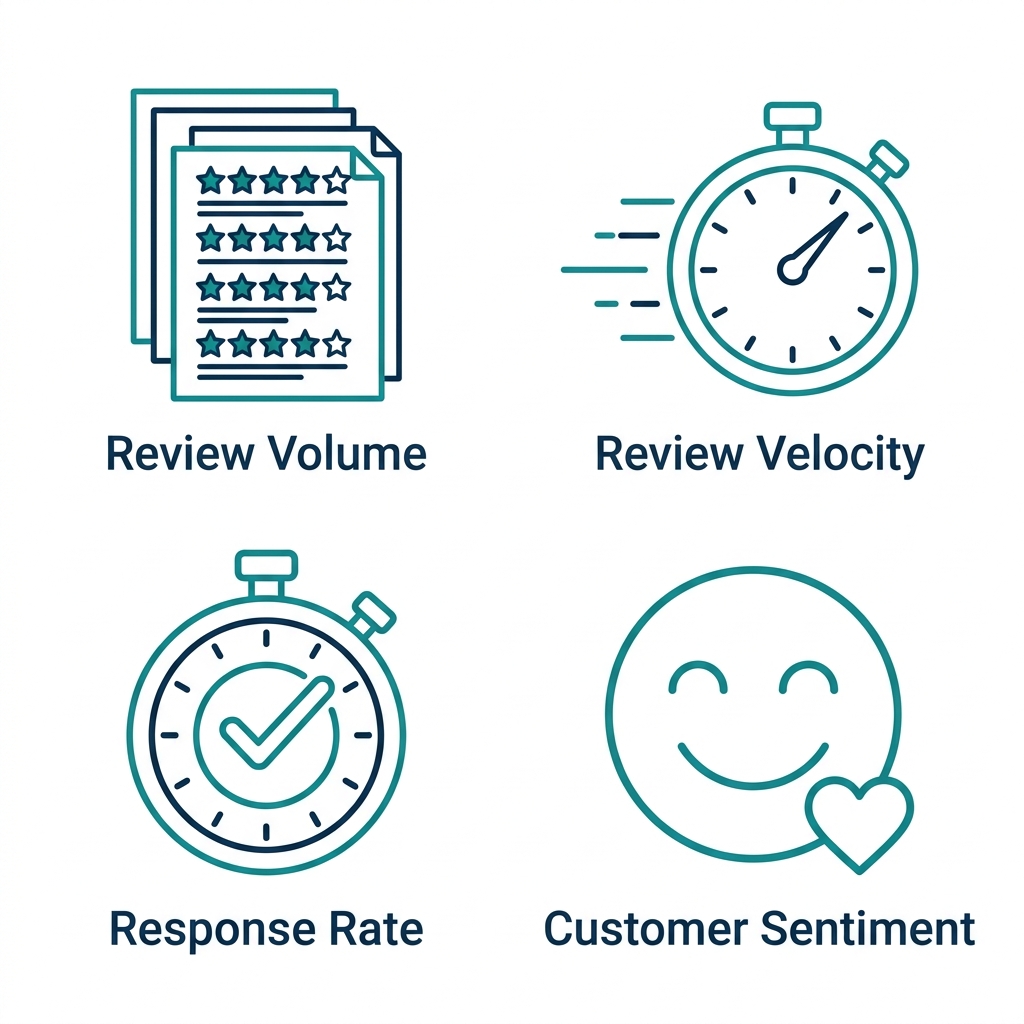
Respond in under 24 hours, from positive to negative, demonstrating your engagement. Prompt replies help build customer trust and tell search engines you’re listening. Ask for reviews during moments when customers feel most satisfied, such as after they’ve finished a purchase or service interaction.
It was also made clear that businesses aren't able to block consumers from leaving negative reviews, because that would run afoul of the rule requiring honesty. Rather than outright silencing bad reviews, businesses can sort by helpfulness, but suppressing genuine criticism may violate the law. But businesses can and should make sure they're tracking customer sentiment to keep getting better at pleasing customers and thereby earning more reviews.
Your Path to a Review-Rich Brand Presence
A review-rich presence relies on systematic solicitation, active management, and compliance. Requesting reviews at peak satisfaction moments—immediately after purchase—yields submissions and feedback. FTC rule confirms that suppressing negative reviews is prohibited; organizing by helpfulness or rating is permissible, but curating away critical feedback invites civil penalties. Our AI agents, GIGI, and map-pinned portals enable brands to respond to reviewers in the owner’s voice. Service is provided “as is” and “as available” without warranties; AI-generated content may be inaccurate; we do not give legal, financial, tax, or medical advice; no ranking, traffic, or revenue outcomes are guaranteed; crypto features carry risk; on-chain transactions may be irreversible. This guide has shown you how to get more online reviews through a structured, compliant process.
Collect Reviews on Autopilot
You now have a complete set of strategies for generating authentic feedback, from timing requests during peak satisfaction moments to personalizing each invitation. Automating review collection with AI agents takes these principles and executes them around the clock, ensuring you never miss an opportunity to capture a happy customer’s praise. Our GIGI AI agents can handle the entire process, from sending timely, personalized review requests to following up on unsubmitted reviews. This approach maintains compliance with FTC rules by keeping requests genuine and transparent. With AI-powered workflows, you can shift from manual outreach to a system that continuously builds your online reputation. The result is a steady stream of authentic reviews that strengthen trust and improve local search visibility. Start turning your satisfied customers into vocal advocates today by exploring our AI agent solutions.